The way businesses build software has changed dramatically over the past few years. In 2026, speed, innovation, and adaptability have become essential for staying competitive. Customers expect seamless digital experiences, faster updates, and personalized solutions. At the same time, businesses are under pressure to reduce development costs while delivering high-quality software products.
This is where AI-First Software Development comes into play.
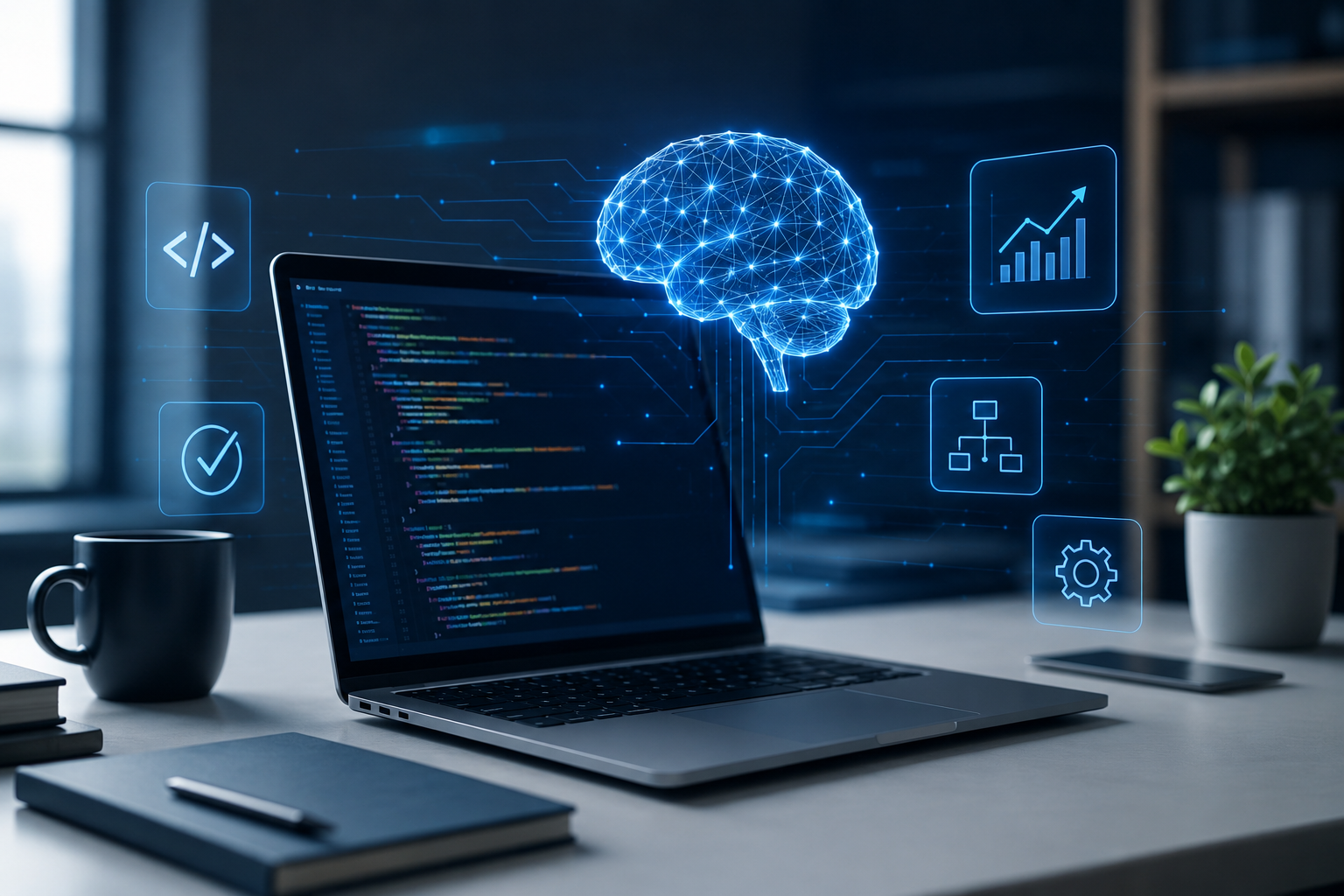
Rather than treating AI as just another feature, organizations are making it a core part of their software development strategy. From planning and coding to testing, deployment, and maintenance, AI is helping teams work smarter and launch products faster than ever before.
Companies like The CoderBox are helping businesses embrace this new approach by combining human expertise with AI-powered technologies to create scalable, efficient, and future-ready software solutions.
In this article, we’ll explore how AI-First Software Development is transforming the software industry, why businesses are investing in it, and what it means for the future of digital innovation.
What Is AI-First Software Development?
AI-First Software Development is a modern approach where artificial intelligence is integrated into every stage of the software development lifecycle. Instead of using AI as an add-on feature, businesses make it a central component of how software is planned, built, tested, and improved.
Think of AI as a highly capable assistant that helps developers write code, automate repetitive tasks, identify bugs, improve security, and make better decisions throughout the development process.
The goal isn’t to replace software developers. Instead, AI empowers development teams to focus on creativity, problem-solving, and innovation while automation handles routine and time-consuming tasks.
This results in faster software delivery, better product quality, and improved efficiency for businesses of all sizes.
Why Businesses Are Adopting AI-First Development
The demand for digital transformation continues to grow across industries. Whether it’s healthcare, finance, retail, education, or manufacturing, businesses need software solutions that can evolve quickly.
Several factors are driving the adoption of AI-first development strategies:
Faster Time-to-Market
Launching software quickly can be the difference between leading a market and falling behind competitors. AI helps development teams automate coding, testing, and deployment processes, significantly reducing project timelines.
Increased Productivity
Developers spend a large portion of their time on repetitive tasks. AI-powered tools can automate documentation, code suggestions, debugging, and testing, allowing teams to focus on more strategic work.
Cost Efficiency
Businesses are always looking for ways to optimize budgets. By automating manual processes, AI reduces operational costs while improving development efficiency.
Better Customer Experiences
Modern software needs to be personalized, intuitive, and responsive. AI enables businesses to create smarter applications that better understand user behavior and preferences.
Improved Quality and Reliability
AI-powered testing and monitoring tools can identify issues before they impact users, helping businesses deliver more reliable software products.
How AI Is Changing the Software Development Lifecycle
1. Project Planning and Requirements Gathering
One of the biggest challenges in software development is accurately defining project requirements. Misunderstandings at this stage can lead to delays and budget overruns.
AI tools can analyze business requirements, customer feedback, and historical project data to create more accurate project plans. This helps businesses make informed decisions from the very beginning.
2. Software Design and Architecture
Creating scalable software architecture requires careful planning. AI can assist architects by recommending frameworks, identifying performance bottlenecks, and suggesting optimized system designs.
As a result, businesses can build software that remains flexible and scalable as they grow.
3. Intelligent Coding Assistance
AI coding assistants have become an essential part of modern software development. These tools help developers:
- Generate code snippets
- Suggest improvements
- Detect errors in real time
- Improve coding consistency
- Reduce repetitive work
Developers still make the final decisions, but AI significantly accelerates the coding process.
4. Automated Testing
Testing often consumes a significant portion of software development resources.
AI-powered testing tools can automatically:
- Create test cases
- Execute tests
- Identify defects
- Detect security vulnerabilities
- Predict potential failures
This allows businesses to release software faster without compromising quality.
5. Deployment and DevOps
Modern software delivery relies heavily on automation. AI enhances DevOps workflows by monitoring infrastructure, predicting failures, and optimizing deployment pipelines.
Businesses benefit from smoother software releases and reduced downtime.
6. Ongoing Maintenance and Optimization
Software development doesn’t end after launch.
AI continuously monitors application performance, user behavior, and system health. It can proactively identify issues and recommend improvements before they affect customers.
This helps businesses maintain high-performing software with fewer resources.
Key Benefits of AI-First Software Development
Faster Product Delivery
AI enables development teams to complete projects in weeks rather than months, helping businesses respond quickly to market opportunities.
Higher Software Quality
Automated testing, code analysis, and intelligent monitoring reduce errors and improve software reliability.
Greater Innovation
With routine tasks automated, developers can dedicate more time to solving complex problems and creating innovative features.
Better Decision-Making
AI provides valuable insights throughout the software development process, allowing businesses to make data-driven decisions.
Enhanced Scalability
As businesses grow, AI helps scale software systems and development processes efficiently.
The CoderBox: Helping Businesses Build Smarter Software
At The CoderBox, we believe that the future of software development lies in combining human creativity with AI-powered innovation.
Our team helps businesses accelerate development by implementing AI-first strategies that improve efficiency, reduce costs, and enhance software quality.
Whether you’re building a custom application, modernizing existing software, or launching a digital product from scratch, The CoderBox provides the expertise needed to turn ideas into scalable business solutions.
By leveraging the latest AI technologies and proven software development practices, we help businesses:
- Accelerate product launches
- Improve customer experiences
- Reduce development costs
- Enhance software security
- Scale digital operations
- Stay ahead of market trends
Our focus is not just on building software but on creating long-term value for businesses through technology-driven innovation.
Industries Benefiting from AI-First Development
Healthcare
Healthcare organizations use AI-powered software to improve patient care, automate administrative tasks, and support medical decision-making.
Financial Services
Banks and fintech businesses rely on AI for fraud detection, risk analysis, customer support, and intelligent automation.
Retail and E-commerce
Retail businesses use AI-driven software to personalize customer experiences, optimize inventory management, and improve sales forecasting.
Manufacturing
Manufacturers are implementing AI-powered software solutions for predictive maintenance, quality control, and operational efficiency.
Education
Educational platforms use AI to deliver personalized learning experiences and improve student engagement.
Challenges Businesses Should Consider
While the benefits are substantial, successful implementation requires careful planning.
Data Readiness
AI systems depend on quality data. Businesses must ensure their data is accurate, secure, and well-organized.
Talent and Training
Development teams need the right skills to effectively use AI-powered tools and workflows.
Security and Compliance
Businesses must establish governance frameworks to ensure responsible AI adoption and regulatory compliance.
Integration Complexity
Introducing AI into existing software systems may require infrastructure upgrades and strategic planning.
Working with experienced software development partners can help overcome these challenges.
The Future of AI-First Software Development
The next few years will bring even greater advancements in AI-powered software development.
Emerging trends include:
- Autonomous coding assistants
- Self-healing software systems
- Predictive project management
- Hyper-personalized applications
- AI-driven cybersecurity
- Intelligent cloud optimization
- Advanced development automation
As these technologies mature, businesses will gain new opportunities to innovate and compete on a global scale.
Conclusion
AI-First Software Development is no longer a future concept—it’s becoming the standard approach for modern businesses.
By integrating AI throughout the software development lifecycle, organizations can build better products, reduce costs, improve efficiency, and deliver exceptional customer experiences.
The businesses that embrace AI-first strategies today will be better positioned to lead their industries tomorrow.
With the right technology partner, such as The CoderBox, organizations can confidently navigate the evolving software landscape and unlock new opportunities for growth, innovation, and digital transformation.
Frequently Asked Questions (FAQs)
1. What is AI-First Software Development?
AI-First Software Development is an approach where AI is integrated into every stage of software development, including planning, coding, testing, deployment, and maintenance, to improve efficiency and accelerate delivery.
2. How does AI help software development teams?
AI assists developers by automating repetitive tasks, generating code suggestions, identifying bugs, improving testing processes, and providing valuable project insights.
3. Can AI replace software developers?
No. AI is designed to support developers, not replace them. Human expertise remains essential for creativity, strategic thinking, architecture design, and business decision-making.
4. What are the benefits of AI-First Software Development for businesses?
Key benefits include faster development cycles, reduced costs, improved software quality, enhanced security, increased productivity, and better scalability.
5. Which industries benefit most from AI-powered software development?
Industries such as healthcare, finance, retail, education, manufacturing, logistics, and e-commerce are already seeing significant benefits from AI-powered software solutions.
6. Is AI-First Software Development suitable for startups?
Yes. Startups can use AI-powered development tools to build products faster, reduce costs, and compete more effectively with larger organizations.
7. How does AI improve software testing?
AI can automatically generate test cases, detect bugs, identify vulnerabilities, and predict failures, making testing faster and more accurate.
8. What challenges should businesses consider when adopting AI?
Businesses should focus on data quality, team training, security compliance, integration complexity, and selecting the right technology partners.
9. How can The CoderBox help businesses implement AI-first strategies?
The CoderBox provides custom software development, AI integration, digital transformation consulting, and scalable technology solutions tailored to business goals.
10. What is the future of AI in software development?
The future includes autonomous development workflows, self-healing software, intelligent DevOps, predictive analytics, and increasingly personalized digital experiences powered by AI.