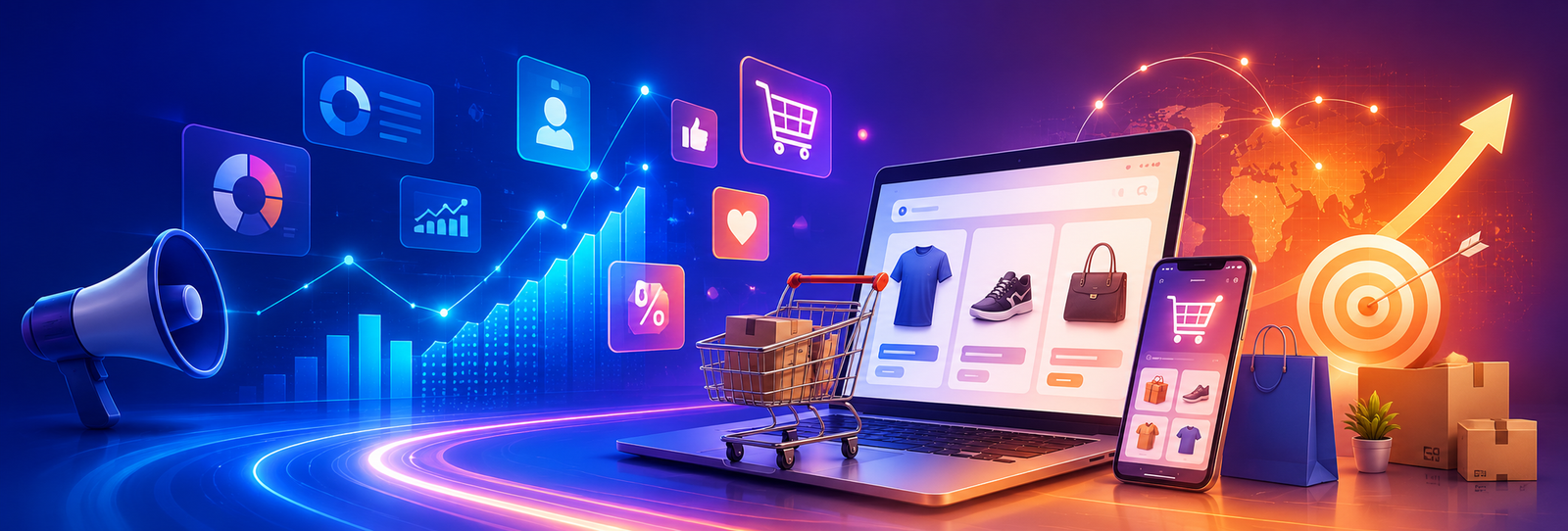
In a digital marketplace where attention is fleeting and competition is relentless, running an online store is no longer just about having great products. It’s about making every marketing dollar work harder, smarter, and faster. That’s precisely the promise of eCommerce performance marketing a results-driven approach where spend is directly tied to measurable outcomes like clicks, leads, and conversions.
Whether you’re scaling a direct-to-consumer brand, managing a multi-category store, or launching a new product line, performance marketing gives you a transparent, data-backed path to growth. Here’s a deep dive into the top services and solutions that make it possible.
What Is eCommerce Performance Marketing?
Performance marketing is a broad category of digital advertising in which advertisers only pay when a specific action is completed a sale, a sign-up, a click, or a form submission. Unlike traditional brand advertising, every campaign is measurable, every channel is accountable, and every dollar spent can be traced to a return.
For eCommerce businesses, this model is transformative. It eliminates guesswork, optimizes budget allocation in real time, and scales winning strategies with precision.
1. Pay-Per-Click (PPC) Advertising
PPC remains the backbone of eCommerce performance marketing. Platforms like Google Adsand Microsoft Ads allow brands to appear at the very top of search results exactly when a shopper is looking for a product. The model is simple: you pay only when someone clicks.
Why it works for eCommerce:
- Captures high-intent buyers actively searching for products
- Allows granular budget control by campaign, keyword, and device
- Delivers near-instant traffic and revenue results
- Easily scalable once a winning ad structure is established
Advanced PPC strategies now incorporate Smart Bidding powered by machine learning, which dynamically adjusts bids in real time based on signals like device, location, time of day, and user behavior maximizing conversions while staying within target ROAS (Return on Ad Spend).
2. Paid Social Advertising
Social platforms are no longer just brand-awareness channels. Meta Ads (Facebook & Instagram), TikTok Ads, Pinterest Ads, and Snapchat Ads have evolved into powerful performance engines capable of driving direct purchases.
Paid social is particularly effective for:
- Top-of-funnel discovery: introducing your product to audiences who don’t know you yet
- Retargeting: reconnecting with users who visited your site but didn’t convert
- Dynamic product ads: automatically showing shoppers the exact product they browsed
- Video-first campaigns: driving engagement and click-throughs with short-form content
The key to high-performing paid social lies in the intersection of creative quality and audience precision. A compelling video paired with a hyper-targeted custom audience consistently outperforms broad campaigns with generic static images.
3. Amazon Advertising & Marketplace Management
For brands selling on Amazon, marketplace advertising is a non-negotiable performance channel. Sponsored Products, Sponsored Brands, and Sponsored Display ads give sellers the ability to dominate search results and product detail pages.
Top Amazon performance marketing solutions include:
- Keyword harvesting and bid optimization to protect margins
- A+ Content and listing optimization to improve conversion rates
- DSP (Demand-Side Platform) for programmatic off-Amazon retargeting
- Competitor conquesting strategies to capture rival brand traffic
Given that millions of purchase decisions happen on Amazon daily, brands that invest in structured, data-led Amazon advertising see significantly higher visibility and sales volume compared to those relying on organic ranking alone.
4. eCommerce SEO
While SEO operates on a longer timeline than paid channels, it is one of the highest-ROI performance solutions available to eCommerce businesses. Organic search traffic is evergreen unlike paid ads, it doesn’t stop the moment your budget runs out.
High-impact eCommerce SEO services include:
- Technical SEO audits: site speed, crawlability, indexing, structured data
- Category and product page optimization: keyword-rich, conversion-focused copy
- Content marketing: blogs, buying guides, and comparison pages that capture informational queries
- Link building: acquiring authoritative backlinks to strengthen domain authority
Brands that combine strong SEO foundations with paid performance channels benefit from full-funnel coverage capturing both discovery-stage and purchase-ready audiences.
5. Email & SMS Marketing Automation
Email and SMS are arguably the most cost-efficient performance channels in eCommerce because you’re marketing to an audience that has already opted in. The key is automation setting up behavior-triggered sequences that deliver the right message at the right moment.
Essential automation flows for eCommerce include:
- Abandoned cart recovery : recapturing lost revenue from shoppers who didn’t complete checkout
- Welcome series: converting new subscribers into first-time buyers
- Post-purchase sequences: cross-selling, upselling, and encouraging repeat purchases
- Win-back campaigns: re-engaging lapsed customers with incentives
Platforms like Klaviyo, Omnisend, and Attentive make it possible to create deeply personalized, segmented messaging at scale, often delivering 35–50% of total eCommerce revenue for well-optimized stores.
6. Conversion Rate Optimization (CRO)
Driving traffic is only half the battle. CRO focuses on turning existing visitors into paying customers often producing the highest ROI of any marketing activity because it amplifies the results of every other channel.
Core CRO services include:
- A/B testing of product pages, landing pages, and checkout flows
- Heatmap and session recording analysis to identify drop-off points
- Checkout friction reduction: streamlining the path to purchase
- Social proof integration: reviews, ratings, trust badges, and UGC
- Personalization: showing tailored content and offers based on user behavior
A modest improvement in conversion rate say, going from 2% to 3% effectively increases revenue by 50% without spending an extra dollar on acquisition.
7. Affiliate & Influencer Performance Marketing
The affiliate and influencer landscape has matured significantly. Today, these channels operate on true performance models where creators, publishers, and affiliate partners earn commissions only when they drive verified results.
Key elements of a strong affiliate and influencer performance program:
- Affiliate networks (ShareASale, Impact, CJ Affiliate) for publisher partnerships
- Commission structures aligned with customer lifetime value, not just first-order revenue
- Micro-influencer programs that deliver higher engagement rates at lower cost
- Performance-tracked creator campaigns using UTM links and promo codes for attribution
This model creates a scalable, low-risk growth channel since costs are entirely tied to actual outcomes.
8. AI-Powered Analytics & Attribution
Modern eCommerce performance marketing is inseparable from data intelligence. Brands now have access to tools that use AI and machine learning to analyze campaign performance, predict customer behavior, and optimize spend allocation automatically.
Essential analytics solutions include:
- Multi-touch attribution modeling: understanding which channels actually drive conversion
- Predictive LTV modeling: identifying high-value customer segments worth bidding more aggressively for
- Real-time dashboard reporting: unified views across all paid and organic channels
- AI-driven creative optimization: automatically identifying which ad creatives perform best and scaling them
Platforms like Triple Whale, Northbeam, and GA4 are widely used by eCommerce brands to make faster, more confident marketing decisions.
Choosing the Right Performance Marketing Mix
No two eCommerce businesses are identical. The right performance marketing strategy depends on your:
- Stage of growth (startup, scaling, or enterprise)
- Average order value (AOV) and profit margins
- Customer acquisition cost (CAC) targets
- Product category and purchase frequency
- Current channel performance and gaps
A brand selling high-ticket, low-frequency products may rely heavily on SEO, PPC, and email nurture sequences. A fashion brand with impulse-buy potential may prioritize TikTok ads, Meta retargeting, and influencer partnerships.
Final Thoughts
eCommerce performance marketing is not a single tactic it’s an integrated system of data, creativity, and channel expertise working in concert. The brands that win are those that invest in the full funnel: attracting the right audience, converting them efficiently, and retaining them profitably.
Whether you partner with a specialized performance marketing agency or build in-house capabilities, the foundation remains the same every campaign must be measurable, every decision must be data-driven, and every dollar must earn its place.
Start with the channels most relevant to your audience, optimize relentlessly, and scale what works. That is the essence of performance marketing done right.