
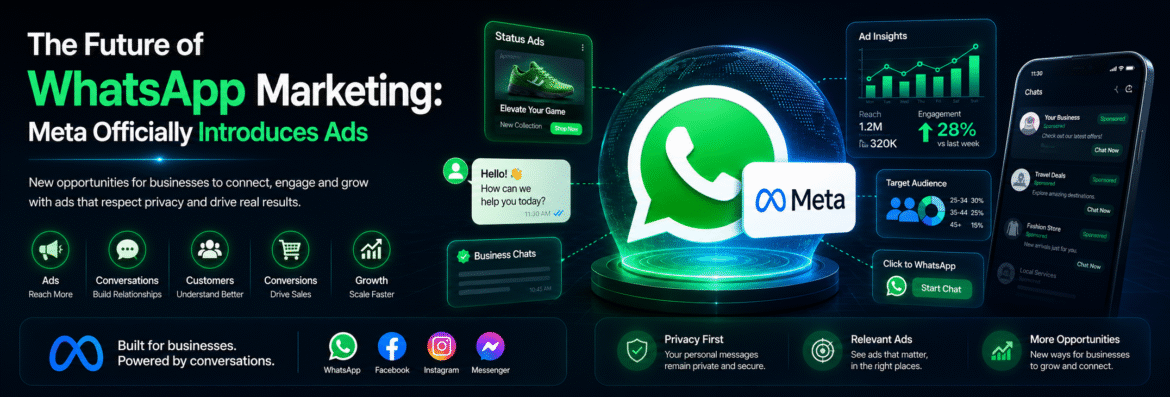
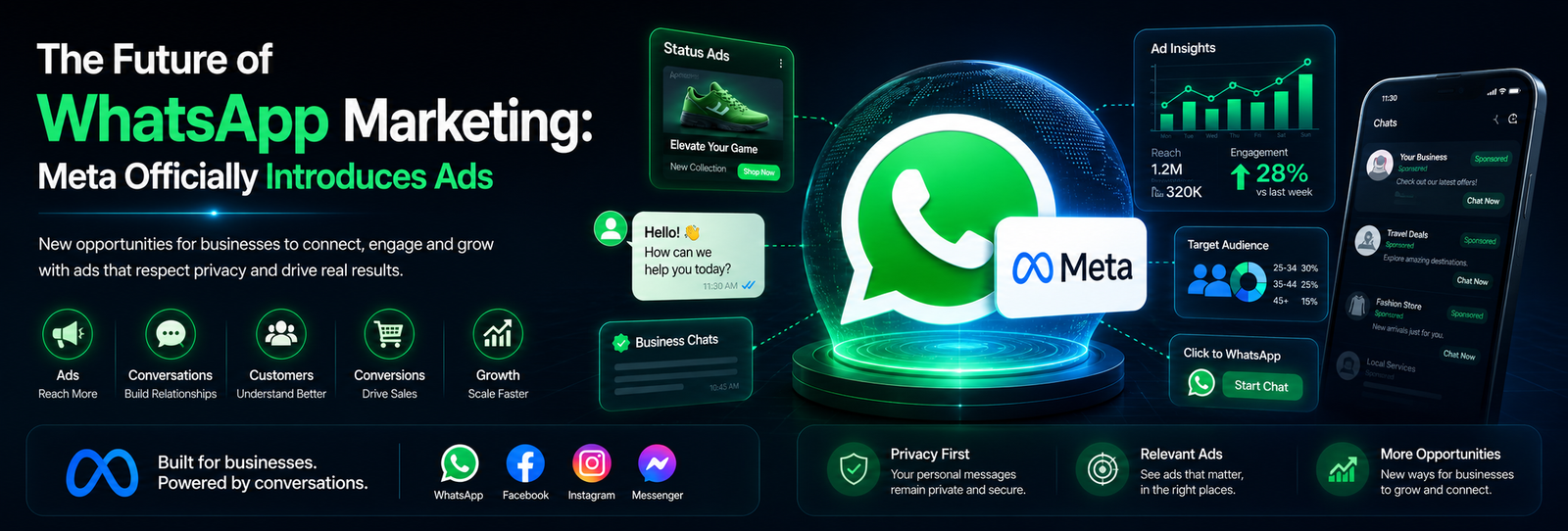
For over a decade, WhatsApp stood as the last great ad-free frontier in Meta’s empire. No banners, no sponsored posts, no interruptions — just pure, encrypted conversation between people. That era is officially over.
In June 2025, Meta announced at the prestigious Cannes Lions advertising festival that ads are coming to WhatsApp. And not in a disruptive, inbox-invading way — but through a carefully considered, privacy-conscious rollout that could reshape the future of digital marketing entirely. With over 2 billion users worldwide and 1.5 billion people visiting the Updates tab daily, WhatsApp isn’t just another app. It’s a global communication infrastructure — and it just opened its doors to advertisers.
Here’s everything you need to know.
A Historic Shift — 11 Years in the Making
When Meta acquired WhatsApp in 2014 for a staggering $19 billion, the founders of the app were famously resistant to advertising. WhatsApp co-founder Jan Koum was known for his strong stance against ads, even displaying a note on his desk that read: “No Ads! No Games! No Gimmicks!”
Meta honored that philosophy — until now.
The shift didn’t happen overnight. It happened because Meta found a way to monetize WhatsApp without compromising its most sacred value: private messaging. By confining ads exclusively to the Updates tab, Meta keeps personal chats, calls, and group conversations completely untouched and end-to-end encrypted. If you only use WhatsApp to text your friends and family, your experience stays exactly the same.
That’s a critical promise — and one Meta is staking its credibility on.
How WhatsApp Ads Actually Work
Meta is rolling out three core monetization features under this new initiative:
1. Ads in Status
The flagship feature. Ads will appear inside WhatsApp’s Status section — the Stories-like feature where users share photos, videos, and text that disappear after 24 hours. This format is nearly identical to Instagram Stories ads, making it familiar to both users and advertisers.
When a user sees a Status ad, they can tap on it and start a direct conversation with the business about the product or service being promoted. This turns a passive impression into an active, high-intent interaction — which is a marketer’s dream.
The format is ephemeral, engaging, and — critically — not in the inbox. Users scrolling through their contacts’ status updates will encounter branded content in a natural, non-intrusive flow.
2. Promoted Channels
WhatsApp Channels allow public figures, brands, news organizations, and creators to broadcast one-way updates to followers. Up until now, discoverability was organic.
Now, Channel admins can pay to boost their visibility in the Channel search directory — similar to how developers promote apps on the Apple App Store or Google Play Store. This creates a direct advertising opportunity for brands that want to grow their subscriber base quickly and reach users who are actively looking for content in a specific niche.
3. Channel Subscriptions
Meta is also introducing a paid subscription model for WhatsApp Channels, allowing admins to offer exclusive content behind a monthly paywall — similar to Patreon or YouTube memberships.
Users can subscribe to their favorite news sources, creators, or brands for premium, subscriber-only updates. Meta won’t take a cut initially, but has confirmed it plans to retain a 10% commission on subscription revenues eventually.
What Data Does Meta Use to Target Ads?
This is where privacy-conscious users and marketers alike will pay close attention. Meta has been explicit about what data is — and isn’t — used.
Data used for ad targeting includes:
- Country and city (general location)
- Language and device settings
- Age (where applicable by law)
- Channels the user follows
- How the user interacts with ads in Status and Channels
- Meta account preferences (only if WhatsApp is linked to Facebook/Instagram via Accounts Center — an opt-in feature, off by default)
Data that will NOT be used:
- Personal messages or chats
- Voice or video calls
- Group membership data
- Phone numbers shared with marketers
Alice Newton-Rex, VP and Head of Product at WhatsApp, put it plainly:
“We’re not putting ads into private messages. If you’re only using WhatsApp for chats and calls, you won’t see any ads.”
Meta also confirmed that WhatsApp, by default, removes or anonymizes personal identifiers(like phone numbers) before any data is shared with Meta’s ad systems. This ensures broad audience targeting without individual identification.
The Revenue Opportunity Is Enormous
From a business perspective, this move is a potential multi-billion dollar unlock for Meta.
Analyst Mark Mahaney of Evercore ISI projects that if Meta earns just $6 in average ad revenue per daily WhatsApp user — a conservative fraction of what it earns on Facebook and Instagram — and grows the Updates tab’s daily user base from 1.5 billion to 1.7 billion, WhatsApp ads could generate approximately:
- $10.2 billion in annual ad revenue by 2028
- Approximately $5 billion in additional operating income
For context, WhatsApp has been one of the only major platforms in Meta’s portfolio generating almost no direct ad revenue — despite being one of the most-used apps on the planet. This changes everything.
What This Means for Marketers and Businesses
For marketing professionals, brands, and agencies, the introduction of WhatsApp ads is a landmark opportunity — especially in markets where WhatsApp dominates digital communication. Countries like India, Brazil, Indonesia, Nigeria, and much of Europe rely on WhatsApp as their primary messaging platform, not a secondary one.
Here’s what the WhatsApp advertising era means for your strategy:
- High-intent touchpoints: Unlike social feeds, WhatsApp Status is checked by people who are already actively engaging with the app. This means higher attention quality.
- Conversational commerce: Every Status ad includes a direct call-to-action to start a conversation. This bridges awareness and conversion in a single tap — compressing the traditional marketing funnel dramatically.
- Brand-safe environment: Because ads are isolated to the Updates tab and away from private chats, users are likely to perceive WhatsApp as a less cluttered, more premium ad environment — at least initially.
- Channel growth at scale: Brands that invest in growing their WhatsApp Channel subscriber base now — organically or through Promoted Channels — will be positioned as early movers in a space that is still wide open.
- Click-to-WhatsApp ad synergy: Meta already supports click-to-WhatsApp ads from Facebook and Instagram that send users directly into a WhatsApp chat. Now, businesses can run a fully integrated funnel — from Meta’s social platforms into WhatsApp and back — creating a seamless, multi-surface marketing loop.
The Privacy Debate — Is It Warranted?
Meta has informed the Irish Data Protection Commission (DPC) — the lead regulator for Meta in the EU — about its WhatsApp advertising plans. As a result, the rollout of ads in WhatsApp for European users will not happen until 2026 while regulatory review takes place.
This signals that despite Meta’s careful framing, the privacy community and regulators are watching closely. The core tension isn’t just about personal messages — it’s about the gradual erosion of a platform that was built on the promise of no advertising.
Users will need to decide how much they trust Meta’s commitment to keeping ad data siloed from chat data. And marketers should prepare for a landscape where users may become increasingly savvy about opting out of linked accounts and ad personalization — adjusting targeting strategies accordingly.
What’s Next?
The global rollout of WhatsApp ads began in June 2025 and is progressing gradually — so not every user will see ads immediately. Meta is being intentional about the pace, likely to monitor user sentiment and prevent backlash.
For marketers, the window to build an organic WhatsApp Channel presence before paid promotion saturates the space is right now. Growing a subscriber base, testing Status content formats, and understanding what resonates in a conversational context will give early adopters a lasting competitive edge.
WhatsApp advertising is no longer a rumor. It’s a reality — and the brands that adapt early will shape how this channel evolves.
Final Thought
Meta’s decision to bring ads to WhatsApp is one of the most strategically significant moves in digital marketing since Instagram introduced Stories ads. Done right, it could create a new category of conversational, high-intent, privacy-respectful advertising that stands apart from the noise of traditional social feeds.
The message to every marketer is simple: WhatsApp is now part of your paid media landscape. The question isn’t whether to pay attention — it’s whether you’ll be ready when the opportunity fully arrives.